
Tailored to your company. Forms, processes, calculations and reporting are agreed around your requirements.
TAILOR-MADE MARITIME SOFTWARE
Port-call software
for onshore ship managers.
Connect the vessel’s onshore port-call information with the agents, cargo documents, operational events and accounts that depend on it. Shape the workspace around your company’s responsibilities.
Discuss your solution ↗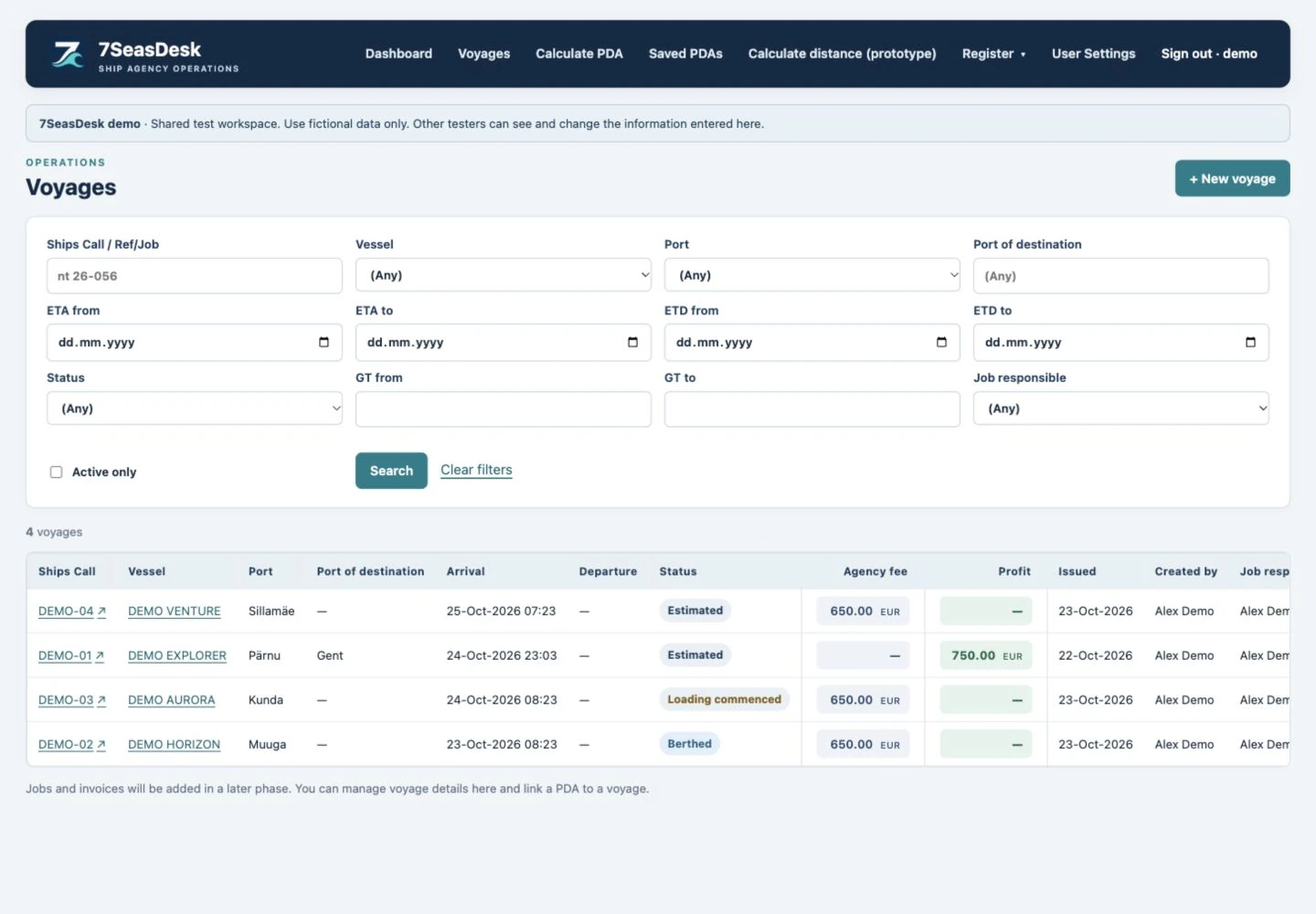
A shared vessel record for onshore coordination
Ship management covers many activities. This workspace focuses on the port-call side: the vessel information supplied to an agent, the visit being coordinated, the cargo documents and the disbursement account. Clear scope matters when choosing maritime software.
Keep the vessel identity and relevant particulars available for the next call, then review the facts that can change between visits. The master, destination, terminal, cargo and dates should remain part of the current operational record.
Keep the owner, operator and agency context together
The companies involved in a vessel’s visit can have different roles. An owner, operator, charterer, shipper or consignee may appear in different documents, and the account recipient needs to be checked separately. Saved company details make repeated entry easier while retaining room for call-specific wording.
The tailored setup defines which information is shared, who maintains it and how it appears on a PDF. Your team reviews the forms and business rules before the workflow is used for live calls.
Review port costs with an understandable calculation basis
The PDA estimates the charges for the visit. The FDA reconciles the actual account. Vessel tonnage, operation, terminal conditions, optional services and agreed agency fees can all affect the result; the relevant tariff coverage must be reviewed for the ports in use.
A shared operational and financial context helps the team follow why an estimate changed. Explore PDA and FDA software and discuss the cost, sales and supporting-document workflow your organisation needs.
Follow the cargo operation and its document set
Several products, Bills of Lading or operation stages can be involved in one call. Keep each cargo description connected to its quantity and unit. Review the Statement of Facts alongside the cargo instructions and departure information.
The cargo document workspace and SOF workflow provide connected inputs for those tasks. The forms, standard phrases and signing areas are agreed around your company’s operational requirements.
Agree the maritime software scope before building
Start with an example of the process you want to improve. Define the people involved, the documents being exchanged, the calculations that need explaining and the reports used by management. A practical example makes the requirements easier to test.
Technical fleet maintenance, crew payroll and other wider ship-management requirements belong in the project scope discussion. The port-call foundation can be tailored to related maritime work, with additional functionality and interfaces assessed explicitly. Tell us about your workflow and we can define a suitable starting point.
Questions about ship management and port operations
Which ship management tasks does this workspace address?
It addresses onshore port-call coordination: vessel particulars, agency information, cargo documents, operational events and port disbursement accounts. The final configuration is agreed for your responsibilities.
Can a vessel operator and an agency use related information?
The required users, access and shared information can be defined during the tailored setup. Data sharing and responsibilities must be agreed for that deployment.
Can other maritime processes be added?
Additional maritime workflows and interfaces can be scoped as a tailored project. We first review the process, example documents and requirements rather than assuming every ship-management function is already included.
Let your workflow shape the solution.
Bring your forms, ports, calculations and handovers. We will review an example configuration and agree the scope around your organisation.
Discuss your solution ↗